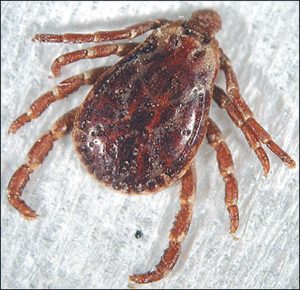
American Dog Tick
This website brought to you in part by the following sponsor:

Find out how to advertise here - Email us! [email protected]

American Dog Tick
This website brought to you in part by the following sponsor:

Blacklegged (Deer) Tick

Brown Dog Tick
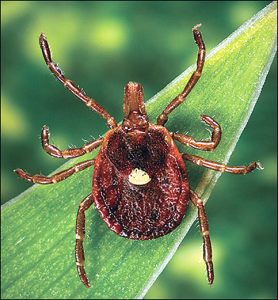
Lone Star Tick
It’s almost summertime, which means more time outdoors fishing, swimming, hunting, hiking and being out and about in nature. Unfortunately, this can also mean exposure to one of nature’s most hideous pests — ticks.
Ticks are ugly, nasty, disease-carrying creatures, which is precisely why they deserve some attention.
Many tick-borne diseases have been reported in Missouri: Rocky Mountain spotted fever, ehrlichiosis, tularemia, heartland virus, bourbon virus, lyme or a lyme-like disease and the southern tick-associated rash illness, babesiosis, relapsing fever, and the little-understood tick paralysis.
Some of these diseases bring on not just chills, nausea and fever, but they can trigger neurological problems and even death.
In the past year, Daviess County had one case of Lyme-like disease, according to the Daviess County Health Department.
Typical symptoms of Lyme disease include fever, headache, fatigue, and the telltale expanding (bull’s eye) skin rash called erythema migrans. If left untreated, infection can spread to joints, the heart, and the nervous system.
Lyme disease is diagnosed based on symptoms, physical findings (e.g., rash), and the possibility of exposure to infected ticks. Laboratory testing is helpful if used correctly and performed with validated methods. Most cases of Lyme disease can be treated successfully with a few weeks of antibiotics.
One case of Rickettsia Parkeri Rickettsiosis was also reported in Daviess County. This tick disease is transmitted to humans by the Gulf Coast tick. This tick disease is in the spotted fever group. Rickettsiosis is not common for this area, according to Cheryl Alexander, administrator at the health department.
Spotted fevers can range from mild to life-threatening. Most people who get sick with a spotted fever other than RMSF will have an eschar (dark scab at the site of tick or mite bite), fever, headache, and rash. Doxycycline is the treatment of choice for all spotted fever infections.
At least one case of alpha-gal allergy has been known to have occurred in the county recently. It was diagnosed by an allergist and suspected to be caused by a tick bite. But, according to the Centers for Disease Control, scientists do not yet know if alpha-gal allergy can be caused by a tick bite. They suspect it is, but say more research is needed.
An alpha-gal allergy is an allergy to the alpha-gal sugar molecule. Allergic reactions typically occur after people eat meat from mammals that have alpha-gal or are exposed to products made from mammals.
Symptoms can include: rash, hives, difficulty breathing, drop in blood pressure, dizziness or faintness, nausea or vomiting, and severe stomach pain.
Symptoms of an alpha-gal allergy commonly appear 3-6 hours after eating meat (e.g., beef, lamb, pork, venison, and rabbit) or exposure to products containing alpha-gal.
Symptoms may not occur after every exposure and can vary from person to person.
The alpha-gal allergy experience by our reader was severe, and even life-threatening.
Tick bites in the region
The following numbers were received from the state epidemiologist through the Daviess County Health Department for some common tick bites and diseases in our region. These numbers cover the following counties: Andrew, Atchison, Buchanan, Caldwell, Clinton, Daviess, DeKalb, Gentry, Grundy, Harrison, Holt, Livingston, Mercer, Nodaway, and Worth, Bates, Benton, Carroll, Cass, Clay, Henry, Jackson, Johnson, Lafayette, Pettis, Platte, Ray, and Saline.
Tickborne Disease Counts by Year for the Northwest District
Disease 2014 2015 2016 2017 2018
Ehrlichhia Chafeensis 63 35 29 42 31
Anaplasmosis 6 3 1 0 0
Lyme-like Disease 1 0 2 1 6
Rocky Mountain 49 53 49 58 48
Spotted Fever
Tick transmitters of disease:
Ehrlichhia Chafeensis — lone star tick
Anaplasmosis — blacklegged tick
Lyme-like Disease — blacklegged tick/also called deer tick
Rocky Mountain Spotted Fever — American dog tick and the brown dog tick
Let’s talk tick:
Ticks have four life cycles: egg, larva, nymph and adult. After a tick egg hatches, the emerging larva is about the size of a poppy seed and has six legs. After a blood meal, maybe a mouse, the larva drops off its host, casts its skin and becomes an eight-legged nymph. After a bloody meal, maybe a dog or deer, the nymph drops to the ground and transforms into an eight-legged adult. Soon after feeding and mating, which usually occurs on a host, maybe human, the adult male dies. The female drops to the ground, and then she dies, too. Finally. But not before laying thousands of eggs to start the whole horrid thing over again. The only good thing about it is that most ticks die at each stage before they are able to find a host.
Ticks bury their teeth deeply into the skin of a host. A tick will unpack its feeding tube and spit out a cocktail of blood-thinning, skin-numbing, human-immune-system-fighting saliva. They will likely take two to three days to eat.
Even if a tick bites you, promptly removing the tick diminishes the potential for disease transmittal. Ticks typically require 24-48 hours of feeding before they can successfully transmit infections like Lyme disease. Take advantage of that time lapse and promptly remove the tick before it can transmit disease.
There are almost 900 tick species, but only a handful cause trouble.
Ticks are not born with disease agents. They pick up disease causing bacteria during feeding and pass them along to other animals during subsequent feedings. Their bite can pack a wallop; they can carry as many as three diseases at one time. For example, the blacklegged deer tick can spread Lyme disease, anaplasmosis, and another illness called babesiosis in one bite.
First Aid for tick bites
Don’t just grab the tick and pull it out. Squeezing the rear end may force the tick to inject body fluids into your flesh. Besides, you should avoid touching the tick with your bare hands because some fluids may enter your system through small cuts.
Use sturdy tweezers or blunt forceps to get it off. Pinch the tick lightly as close to your skin as possible (near its head) and remove the tick with a steady lifting motion—no twisting, squeezing or puncturing.
After removing the tick, bathe the bite area (maybe even scrub it with cotton swab dipped in hydrogen peroxide/iodine/alcohol), apply antibiotic ointment and cover it with a bandage.
Don’t be touching the tick with a hot match. It will rupture, splattering disease stuff all over the place. Coating the tick with nail polish or petroleum jelly might cause the tick to throw up into your flesh.
Flush it down the toilet.
You can save the tick in case you do come down with something. Put it in a sealed plastic bag marked with the date and stash it in the refrigerator. Label it, to avoid confusion.