Young premed student learns more than medicine through international training
Jan 23, 2019 | Community News |
Briar Roll recently traveled to the Dominican Republic with 38 other University of Missouri students on a medical mission with Global Medical Training. Global Medical Training is an international humanitarian organization that provides free medical-dental services to medically deprived communities in Central American countries.
Briar, a 2018 Gallatin High School graduate and daughter of Laurie and David Roll of Gallatin, is studying biochemistry at MU with an emphasis in premed. The mission not only increased her understanding of medical procedures, but also of life beyond the borders of the United States. She learned firsthand the impact of social and economic development on public health.
Stationed at Barahona in the Dominican Republic, the group traveled very near to the border of Haiti and set up medical clinics each day. The clinics were held either in a church or a school. The bus rides were long, a two-hour trip to get to the clinic and then two hours back.
“We were working probably nine hours, so it made for some pretty long days,” Briar says.
The closer they drew to the Haitian border, the poorer the economy became. Even though they were still in the Dominican Republic, they were mostly treating Haitians.
“The Haitian people were coming to the Dominican Republic to try to make a little bit more money,” Briar explains. “They could make $1 a day in Haiti and $3 a day in the Dominican Republic cutting sugar cane.”
The people had very limited access to health care, and so the arrival of the health clinics, especially the arrival of a doctor, was so rare that schools would be canceled for the day.
“In America, we call a doctor and get an antibiotic on the same day. These people wait for months,” Briar says.
Students worked in small groups with the aid of a translator and a doctor from the Dominican Republic to help diagnose and treat patients.
The biggest problems the students saw were diseases and conditions caused by parasites, like scabies, because of the poor water quality in the area, along with malnutrition.
“They have no means to practice personal hygiene because of the water crisis,” says Briar. “It was the same way with the flu and colds. The people don’t have access to medicine to get over being sick before their condition worsens.”
The hardships of living in a third world country became a tangible memory for Briar when she treated one small four-year-old boy.
“He had parasites so bad the lining of his butt was coming out when he pooped; his mother would shove it back in,” she says. “He couldn’t eat anything; it just went right through him. We gave him vitamins and a parasite treatment and told his mom to give him another dose in two weeks because it was so bad a case.”
Briar would sometimes accompany a doctor on a “home visit” in order to care for patients who were unable to travel to the clinic. When a stroke victim couldn’t come to the clinic, for instance, they went to his house.
“We saw everything, all ages, all kinds of people,” she says. “Another gentleman lived in a plastic chair under a tree. That was his home.”
The team had a certain amount of preparation through workshops for the trip to ensure that they received the basic clinic or dental knowledge they would need.
“You can only be prepared to a certain point,” Briar says. “But nothing prepares you for how much they need help.”
Briar is planning to go back with Global Medical Training every year. There are three locations MU sends students: The Dominican Republic; Peru; and Nicaragua. It will depend on whether she leaves in the spring or winter as to where she’ll be sent.
Applying what she learned on the mission will contribute greatly to Briar’s development as a healthcare provider. But she learned far more than medicine from the trip.
“I learned a lot about the patient/doctor relationship,” she says. “How to figure out what’s going on with the patient. Each group had personal translators who spoke Spanish or Creole. Figuring out what the patient was trying to say through a translator was both interesting and frustrating. The translators were great, but they would struggle sometimes to find a word that would make sense to us. Sometimes we’d go in a circle. When we did figure it out, the translators would write it down so they’d know for the next one.”
Briar’s group spent nine days in the Dominican Republic, Jan. 3-11. They treated 1,500 patients in total for the five days at the clinics. That number set a record for the most patients helped in the Dominican Republic through Global Medical Training.
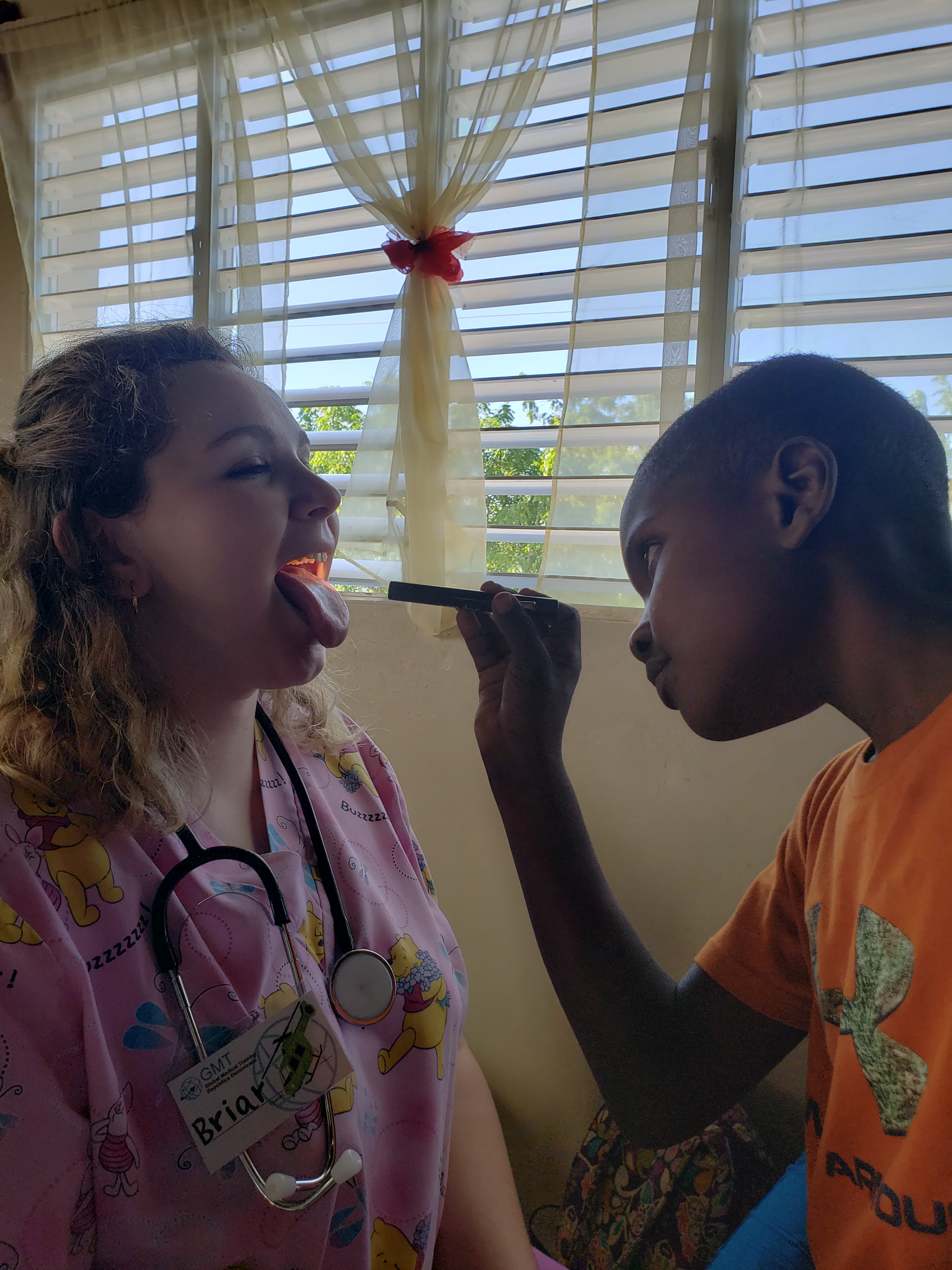
A lot of kids wanted to try out our tools and do what we do so we would show them how to use the stethoscopes and pin lights. This is Israel and he was 9 years old.
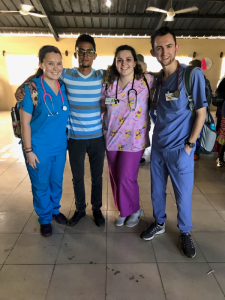
The groups normally worked in groups of three with a translator so this was Briar’s translator, Adriel, along with students Maggie and Adam for a few days of clinics.

Here are some of the patients Briar saw along with some other Mizzou students. They asked to take a picture like Americans do with a peace sign.
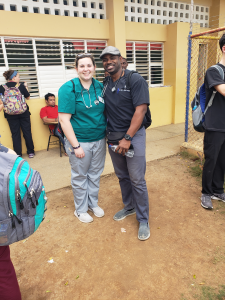
This is Dr. Jack Nell. He is a pediatric respiratory doctor at a hospital in Santo Domingo and volunteers his time to help with GMT clinics.
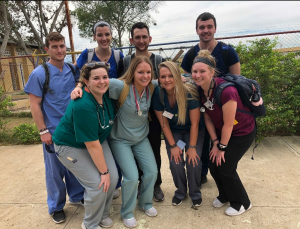
This is the group of students Briar was mainly with during clinics.

This is one of the locations Briar was at on a Dominican map.
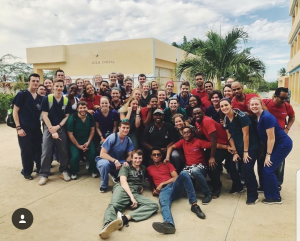
Here is a picture of all of the Mizzou GMT students with some of the translators and doctors who helped the group out.
“It was pretty cool,” Briar says.