
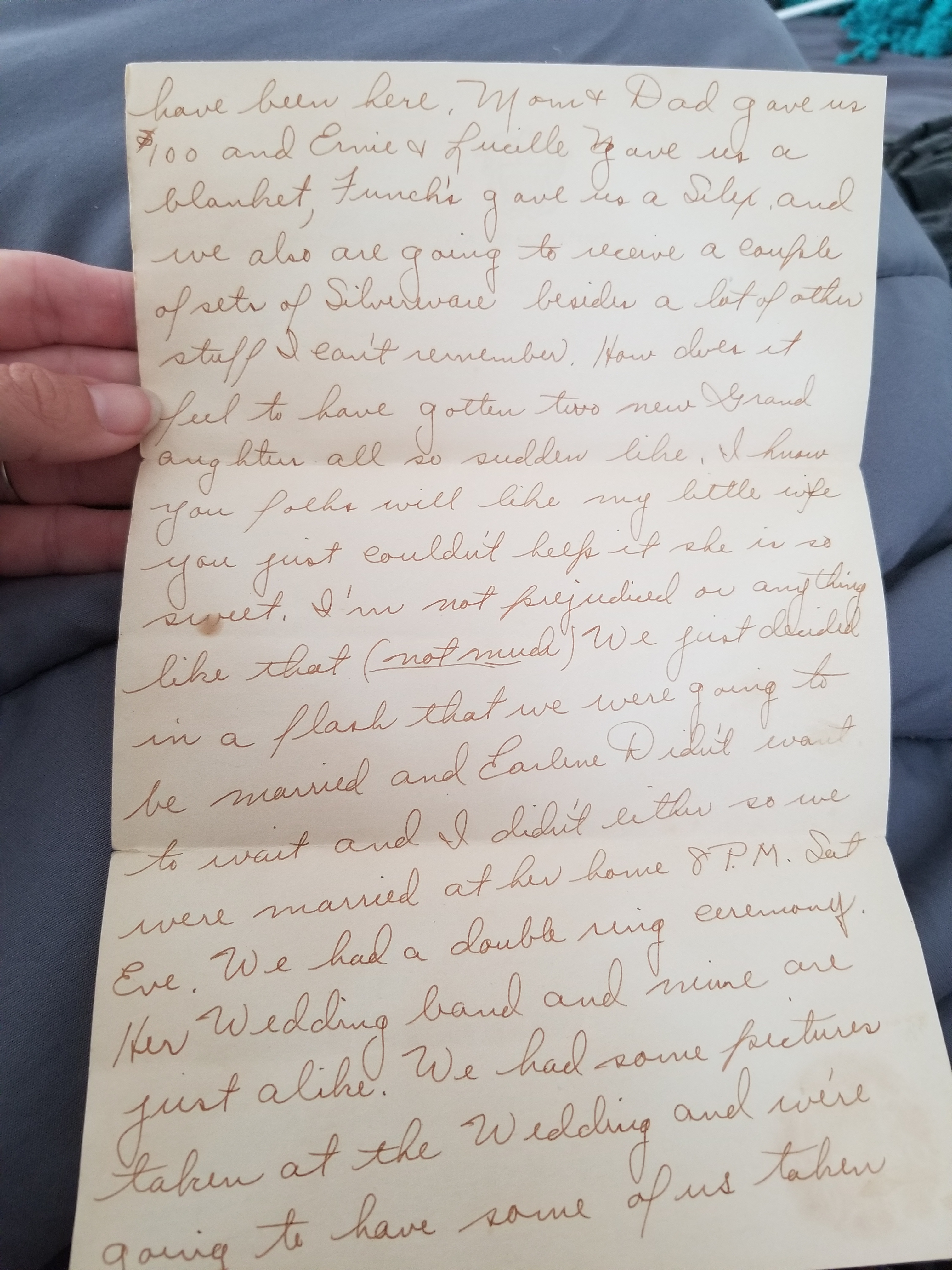
 Amanda Howe never knows what’s going to turn up as she and her husband Robert begin the work of renovating an old home — but this time she believes they have found the “coolest thing we’ve ever found in any of the homes.”
This website brought to you in part by the following sponsor:

Find out how to advertise here - Email us! [email protected]
On the evening of July 18, Amanda was going through a home they’d recently purchased from an investor friend. The farm house is located south of Ludlow and sold with the acreage.
Amanda discovered a box of letters from a World War II soldier. His name was Floyd Woods. There are dozens of the letters and they are all i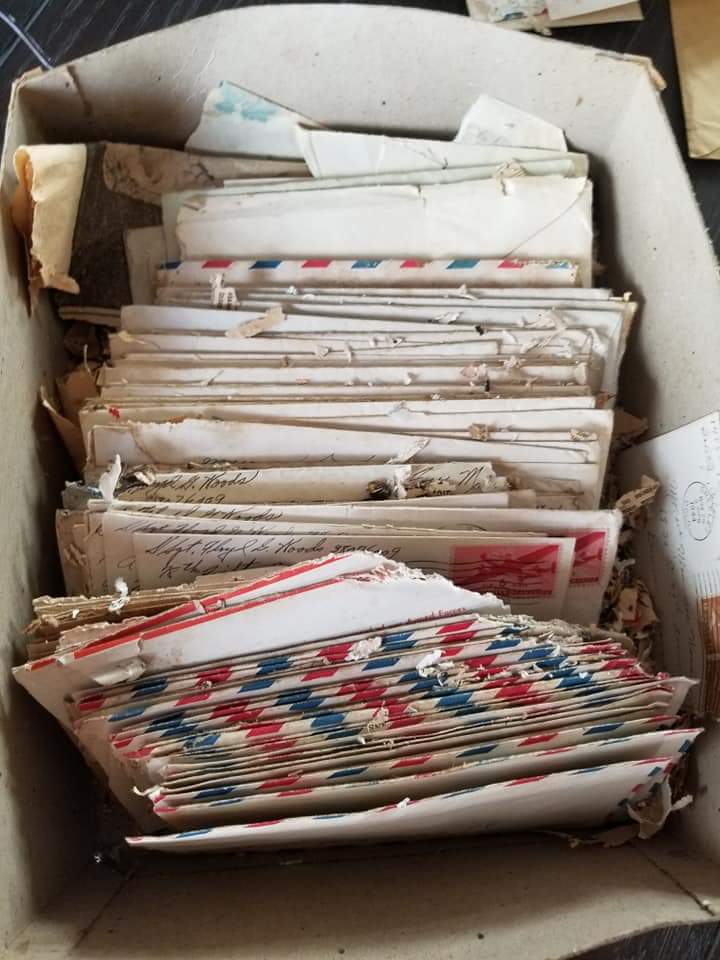 n very good condition.
“I opened up a trash bag full of clothes and out fell the box of letters,” she says. “I was absolutely wowed by them. I read seven before I made myself quit.”
There are dozens of the letters written by a soldier in the Navy stationed overseas. He is writing to his kinfolk back home. The letters are dated 1940 to 1945. They are in chronological order, going by the postmark.
“I’m also amazed by these stamps, one cent and three cent,” Amanda says. “There are army war planes on the stamps.”
According to deeds and documentation, the family name of the home owners was Neilan, and they had apparently owned the home for over 100 years.
However, most of the letters were addressed to a Bertha Wood in Greeley, CO. Bertha was Floyd’s mother. His father was Joseph O. He had two older siblings, Belva and Charles.
“We don’t know how the letters are linked to the owners of the house,” Amanda says.
They have found other WWII items in the house, from cannonballs to medals.
“There’s a lot of stuff in this house,” says Amanda. “It was fully furnished when we bought it. We still have the garage to go through.”
Amanda and Robert renovate homes for resale and also build new homes. They are currently building a second home in Chula. They are renovating homes in Chillicothe, Trenton and Ludlow.
“When we buy homes to renovate, we first clear everything out,” Amanda says. “My husband sells all the antiques left in the homes. We sell anything valuable and rare, instead of trashing it.”
It’s not unusual to find antiques and unusual items.
“We found a pump organ one time, which was really neat,” Amanda says.
But this ‘find’ is different. This time she has found a personal link to a family and an intimate look into the thoughts and feelings of a war-weary soldier longing for home.
So far through her reading of the letters, she knows that Floyd enlisted in 1940. He was stationed in California at Camp Roberts. He ended up in Italy and North Africa.
“In each letter he writes down where he is at, which helps a lot,” she says.
Not all of the letters are from Floyd. At least one is from a man named Les, who may have been Floyd’s nephew. The search for how everyone is connected is ongoing with help from friends who have access to genealogical websites.
“Somewhere in the midst, Les gets married. He met his wife Earline in Italy. They were married in 1942.”
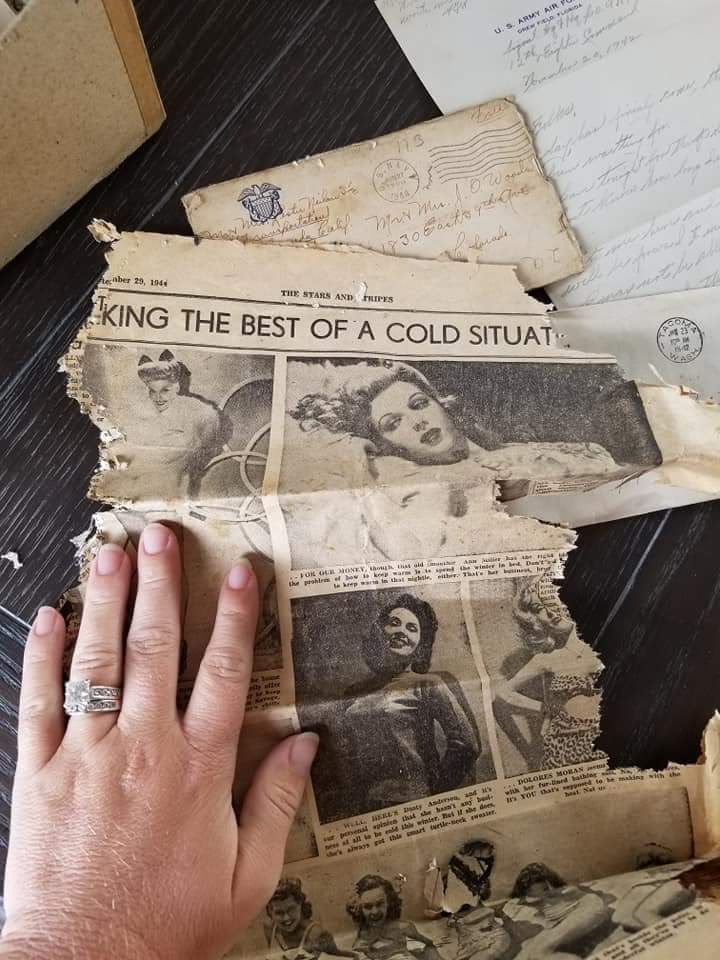
Amanda also found a newspaper clipping in the box. The story is about a woman named Dusty Anderson. The date on the clipping is Sept. 29, 1944. She’s not sure how the clipping is connected.
“Mice have chewed up both sides of the newspaper,” she says. “It’s hard to tell why it’s even in there. Maybe I’ll know the story when I read through some more of the letters.”
Wednesday evening her husband was intent on clearing out the garage, but Amanda was intent on reading the letters.
“My father has found the letters very interesting, too,” she says. “He’s a war veteran himself.”
Floyd’s neat, flowing handwriting is easy for her to read once she got used to it.
“For the most part everything is legible,” she says. “I love the way he speaks. He speaks in the ‘40s and ‘50s time era.”
A friend has found information about Floyd Woods on ancestry.com. Floyd’s wife’s name was Mary Evelyn She has posted pictures of his gravestone showing he passed away in 1975.
“This means he survived the war,” Amanda says. “But he was only 57 when he died.”
For Amanda the letters are a fascinating glimpse into another time and place. She is aware of a sense of sadness as she sits in the old farm home and reads the letters.
“It was as if somebody got up from the kitchen table and walked out and never came back,” she says.